5 STAR QUALITY SERVICE
The Complete Guide to Car Window Tinting Laws: Stay Legal While Beating the Heat
When you slide into a car on a scorching summer day, the difference between factory glass and professionally tinted windows isn't just noticeable, it's transformative. But here's the catch: that comfort comes with legal boundaries that many drivers don't fully understand until they're pulled over. At Mike's Tint Shop, we've seen countless customers who love the look and feel of dark tint, only to face expensive fix-it tickets because they didn't know their state's regulations.
Window tinting isn't just about aesthetics or privacy. It's a carefully regulated modification that balances driver comfort, UV protection, and vehicle safety with law enforcement's need for officer visibility during traffic stops. Understanding these laws isn't optional; it's essential before you invest in any tinting service.
Deciphering the Language of Tint Laws
Before diving into specific state regulations, let's decode the terminology that appears on every tint law chart.
VLT (Visible Light Transmission): The Percentage That Matters
VLT is the measurement of how much visible light passes through your window film. Here's the counterintuitive part that confuses many first-time customers: lower percentages mean a darker tint. A 5% VLT film (often called "limo tint") blocks 95% of visible light, creating an extremely dark appearance. A 70% VLT film only blocks 30% of light, appearing much lighter and more subtle.
When your state law says "35% VLT minimum," they're requiring that at least 35% of visible light must pass through the combined window and film. This is crucial because factory windows aren't completely clear; they typically have 75-80% VLT on their own.
The AS-1 Line: Your Windshield's Legal Boundary
Look at your windshield's upper corner, and you'll likely see a small notation that reads "AS-1." This manufacturer's mark indicates the maximum point where non-transparent items (like sun visors or tint strips) should extend. In most states, you can apply a tint strip above this line, but the main viewing area below it must remain at the legal VLT requirement, usually 70% or higher, which effectively means no aftermarket tint for most vehicles.
Reflectivity and Color Restrictions: Why Mirror Tints Are Banned
Many states prohibit highly reflective or "mirror" tints because they can create dangerous glare for other drivers, especially at night. Similarly, red and amber tints are commonly banned because they can be confused with emergency vehicle lighting. At Mike's Tint Shop, we steer customers toward neutral gray, charcoal, or subtle bronze tones that provide excellent performance without raising legal red flags.
State-by-State Breakdown: Know Before You Tint
Tint laws vary dramatically across the United States, largely influenced by regional climate concerns and law enforcement visibility standards.
California: Strict Standards for Officer Safety
California maintains some of the nation's strictest tinting regulations:
- Front Side Windows: Must allow 70% VLT or more (essentially no aftermarket tint)
- Rear Side & Back Windows: Any darkness allowed, but only if the vehicle has dual side mirrors
- Windshield: 4-inch strip above AS-1 line only
California's approach reflects a high priority on officer safety during traffic stops. The good news? Rear windows can be as dark as you want, which still provides significant heat rejection and privacy for rear passengers.
Texas: Heat-Driven Leniency
Everything's bigger in Texas, including the allowance for a darker tint to combat brutal summer heat:
- Front Side Windows: 25% VLT minimum
- Rear Side & Back Windows: Any darkness
- Windshield: 5-inch strip or AS-1 line, whichever comes first; 25% VLT on the top area
Texas recognizes that intense sun exposure creates legitimate safety concerns from heat exhaustion and glare, allowing residents more freedom in their tint choices.
Florida: Balancing Sun and Safety
Florida's subtropical climate earns residents some tinting flexibility:
- Front Side Windows: 28% VLT minimum
- Rear Side Windows: 15% VLT minimum
- Back Window: 15% VLT minimum
- Windshield: Non-reflective tint above AS-1 line only
New York & New Jersey: Conservative Approach
These northeastern states maintain stricter standards:
- New York Front Side Windows: 70% VLT (no aftermarket tint)
- New Jersey Front Side Windows: No tint allowed
Both states allow any darkness on the rear windows of SUVs, vans, and trucks
Quick Reference: Find Your State's Requirements
| State | Front Side Windows | Rear Side Windows | Back Window | Windshield Strip |
|---|---|---|---|---|
| California | 70% VLT | Any | Any | AS-1 line |
| Texas | 25% VLT | Any | Any | 5" or AS-1 |
| Florida | 28% VLT | 15% VLT | 15% VLT | AS-1 line |
| New York | 70% VLT | Any (SUV/Van) | Any (SUV/Van) | AS-1 line |
| New Jersey | No tint | Any (SUV/Van) | Any (SUV/Van) | AS-1 line |
| Arizona | 33% VLT | Any | Any | AS-1 line |
| Nevada | 35% VLT | Any | Any | AS-1 line |
| Illinois | 35% VLT | 35% VLT | 35% VLT | 6" strip |
Performance vs. Legality: Choosing the Right Film
Here's where many customers get stuck: they want maximum heat rejection, but they also need to stay legal in states with strict VLT requirements. The solution lies in modern film technology.
Ceramic vs. Carbon: The Game-Changing Difference
Carbon Film: This mid-tier option uses carbon particle technology to block heat and UV rays without using metal. It won't interfere with radio, GPS, or mobile signals, and it provides good heat rejection at an affordable price point. Carbon film typically comes in darker shades (20-35% VLT), making it perfect for rear windows and states with lenient laws.
Ceramic Film: This is where technology meets legality. Ceramic films use nano-ceramic particle technology to reject up to 99% of UV rays and 80% of infrared heat without requiring dark shading. At Mike's Tint Shop, we regularly install 70% VLT ceramic film on front windows for California customers. It's completely legal, virtually invisible, yet blocks more heat than a dark 20% dyed film.
Think of it this way: older film technology relied on darkness to block heat. Ceramic technology blocks heat at the molecular level, independent of visible light transmission. You can stay completely legal while enjoying better performance than an illegal dark tint.
Why Metallic Films Are Becoming Obsolete
Traditional metallic films create heat rejection by using tiny metallic particles that reflect solar energy. The problem? These same particles interfere with radio frequencies, degrading your mobile phone signal, GPS navigation, and satellite radio reception. Modern carbon and ceramic films deliver superior performance without this critical drawback.
Special Legal Considerations: Exceptions and Requirements
Medical Exemptions: When Darker Tint is Medically Necessary
Most states offer medical exemption permits for individuals with documented light-sensitive conditions such as lupus, photosensitivity disorders, melanoma history, or severe sun allergies. The process typically involves:
- Obtaining documentation from a licensed physician or dermatologist explaining your medical need
- Submitting an application to your state's DMV or motor vehicle commission
- Receiving a signed exemption certificate to carry in your vehicle
- Installing tint within the exemption's specified VLT range
At Mike's Tint Shop, we work with several customers who have medical exemptions, and we always recommend keeping the certificate in your glove box. Officers can't verify your exemption status during a traffic stop without seeing your documentation.
Certification Stickers: Your Proof of Compliance
Reputable tint shops provide manufacturer certification stickers that display the film's VLT percentage. These small stickers, typically placed between the window and door frame, serve as instant proof to law enforcement that your tint is legal. We include these with every installation at Mike's Tint Shop, and they've saved countless customers from unnecessary tickets.
Factory Tint vs. Aftermarket: The Stacking Problem
Here's a mistake we see regularly: customers with factory-tinted rear windows (usually around 20-25% VLT) want matching darkness on their front windows. They assume "20% all around" will look uniform. But when you add 20% aftermarket film to a 20% factory window, you're not getting 20% VLT; you're multiplying the light-blocking effect.
The math: 20% factory tint × 20% aftermarket film = 4% final VLT. That's limo-dark and illegal almost everywhere for front windows. At Mike's Tint Shop, we always measure your factory glass before recommending film percentages to ensure the combined result keeps you legal.
Maintenance and Safety After Installation
Your tint investment requires proper care, starting immediately after installation.
The 3-5 Day "No Roll" Rule
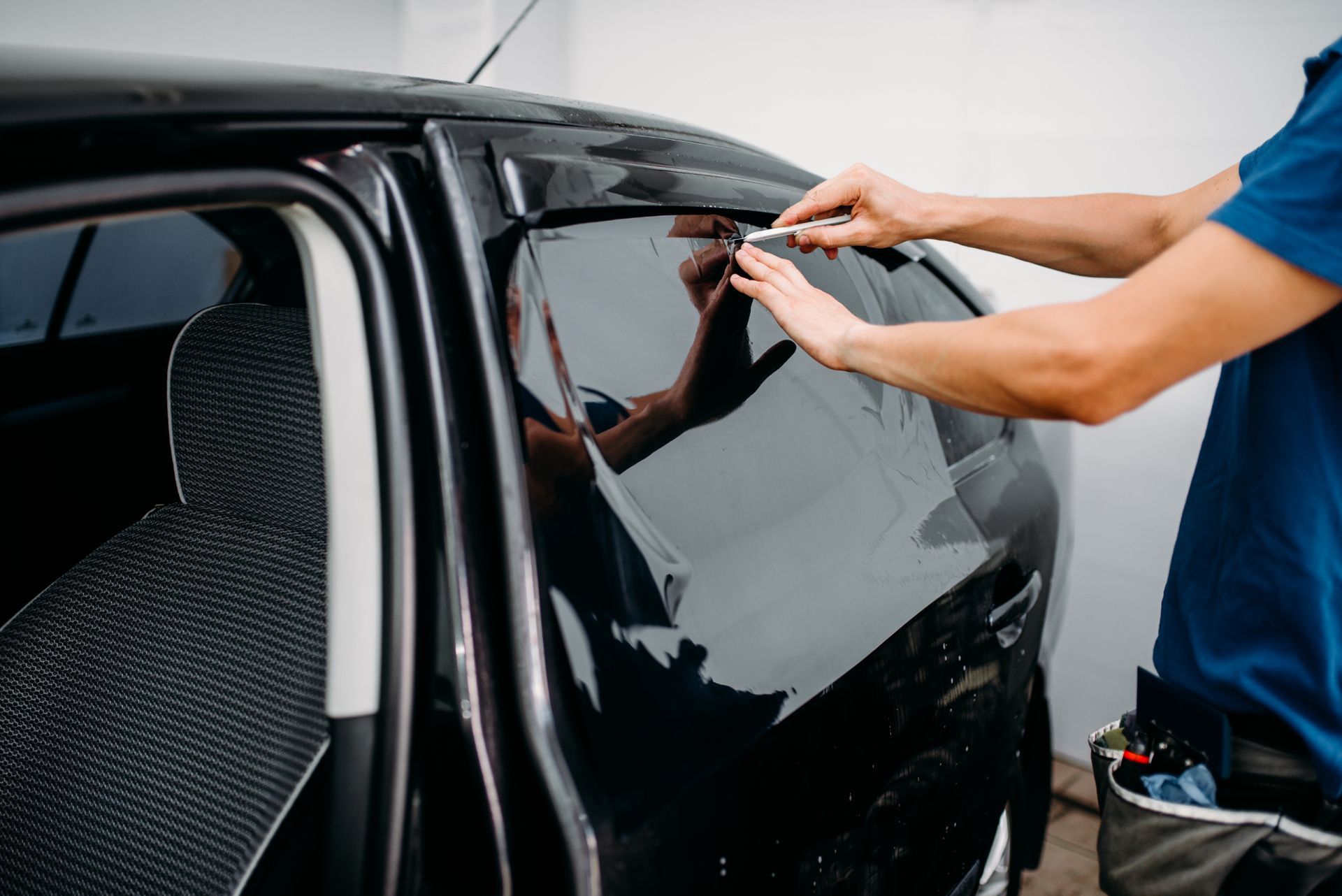
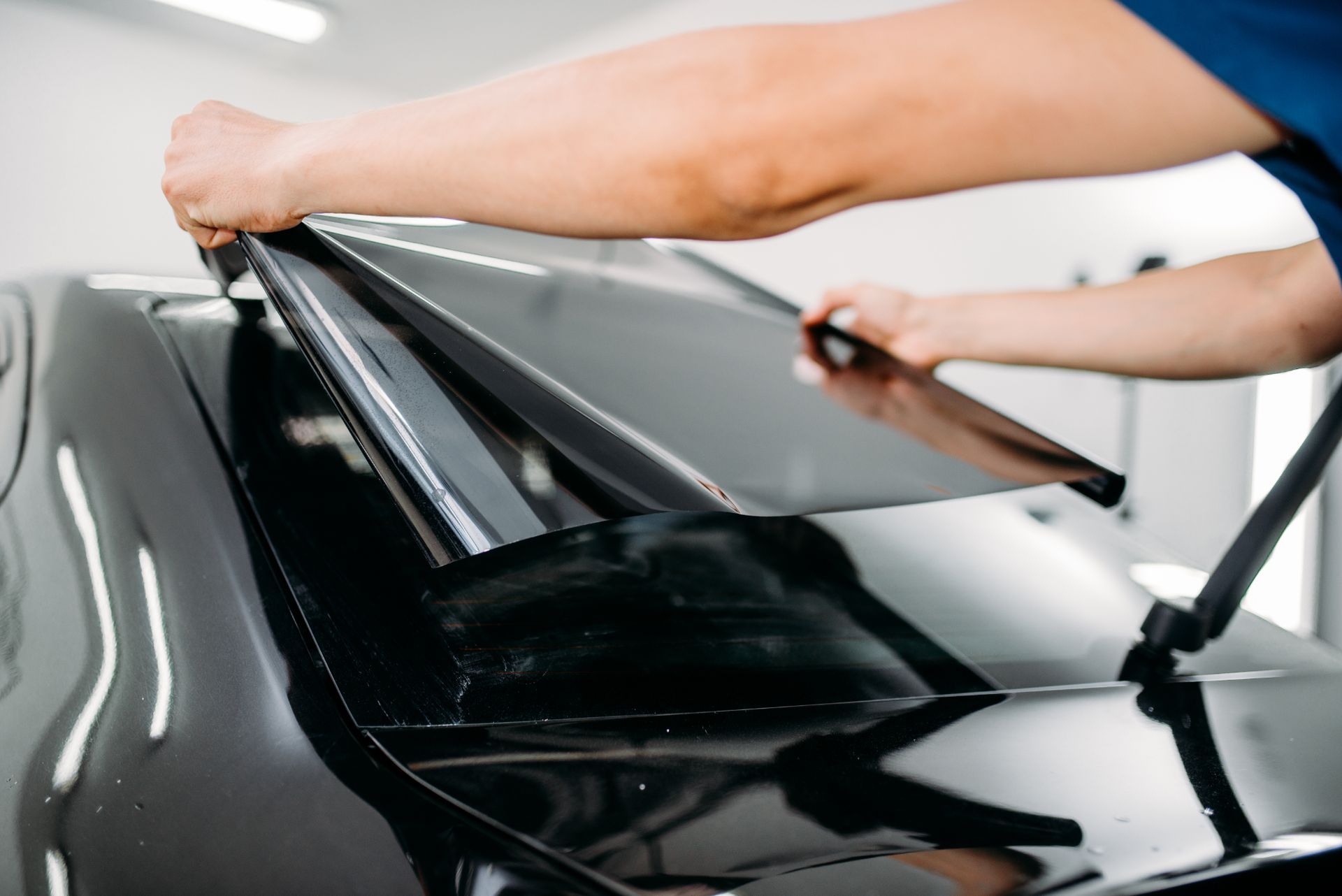
Fresh tint needs time to cure and adhere properly to your window. During the first 3-5 days (longer in cold weather):
- Do not roll down your windows
- Expect to see small water bubbles or a hazy appearance—this is normal
- Avoid placing objects against the tinted windows
The film is bonded using a water-based adhesive that needs time to evaporate completely. Rolling down windows prematurely can cause peeling, creasing, or bubbles that won't disappear.
Ammonia-Free Cleaning for Long-Term Performance
Ammonia-based cleaners (like standard Windex) will break down tint film over time, causing discoloration, bubbling, and delamination. Instead, use:
- Mild soap and water
- Ammonia-free glass cleaners (clearly marked on the label)
- Microfiber cloths to prevent scratchin.
With proper care, quality ceramic or carbon film should last 10-15 years or more without fading or peeling.
Making the Smart Choice at Mike's Tint Shop
Understanding tint laws isn't about limiting your options; it's about making informed decisions that protect your investment and keep you ticket-free. Whether you're in a strict state like California or a lenient jurisdiction like Texas, modern ceramic film technology means you never have to choose between performance and legality.
At Mike's Tint Shop, we've built our reputation on three principles: legal compliance, quality materials, and expert installation. We don't just apply film; we educate our customers on local regulations, measure factory glass VLT, and provide certification documentation with every job.
Before you tint, know your state's laws. Before you drive, know your rights. And before you choose a shop, choose one that values both.
Ready to upgrade your ride with professional, legal window tinting?
ContactMike's Tint Shop today for a free consultation and VLT assessment. We'll help you find the perfect balance of comfort, protection, and compliance.