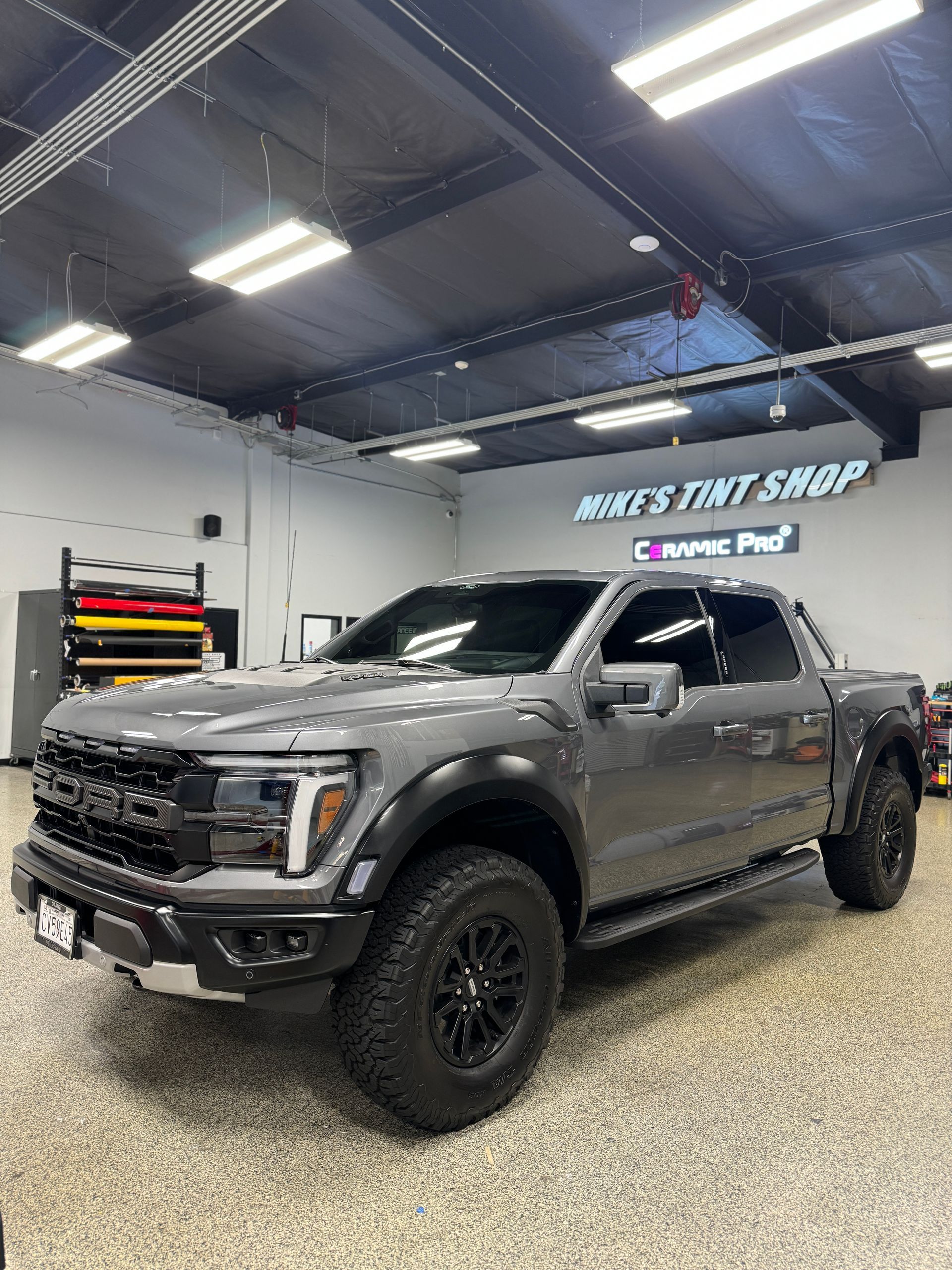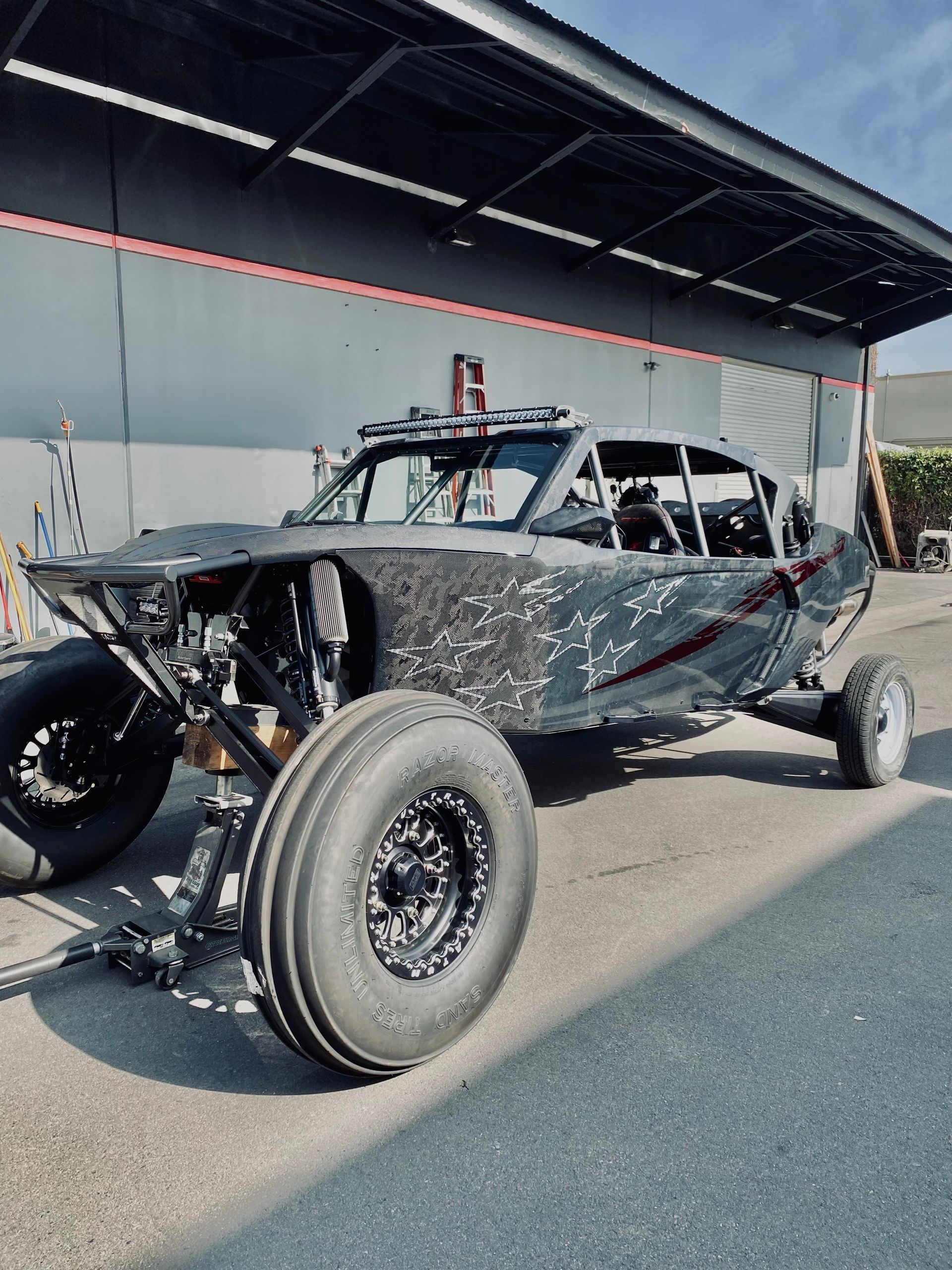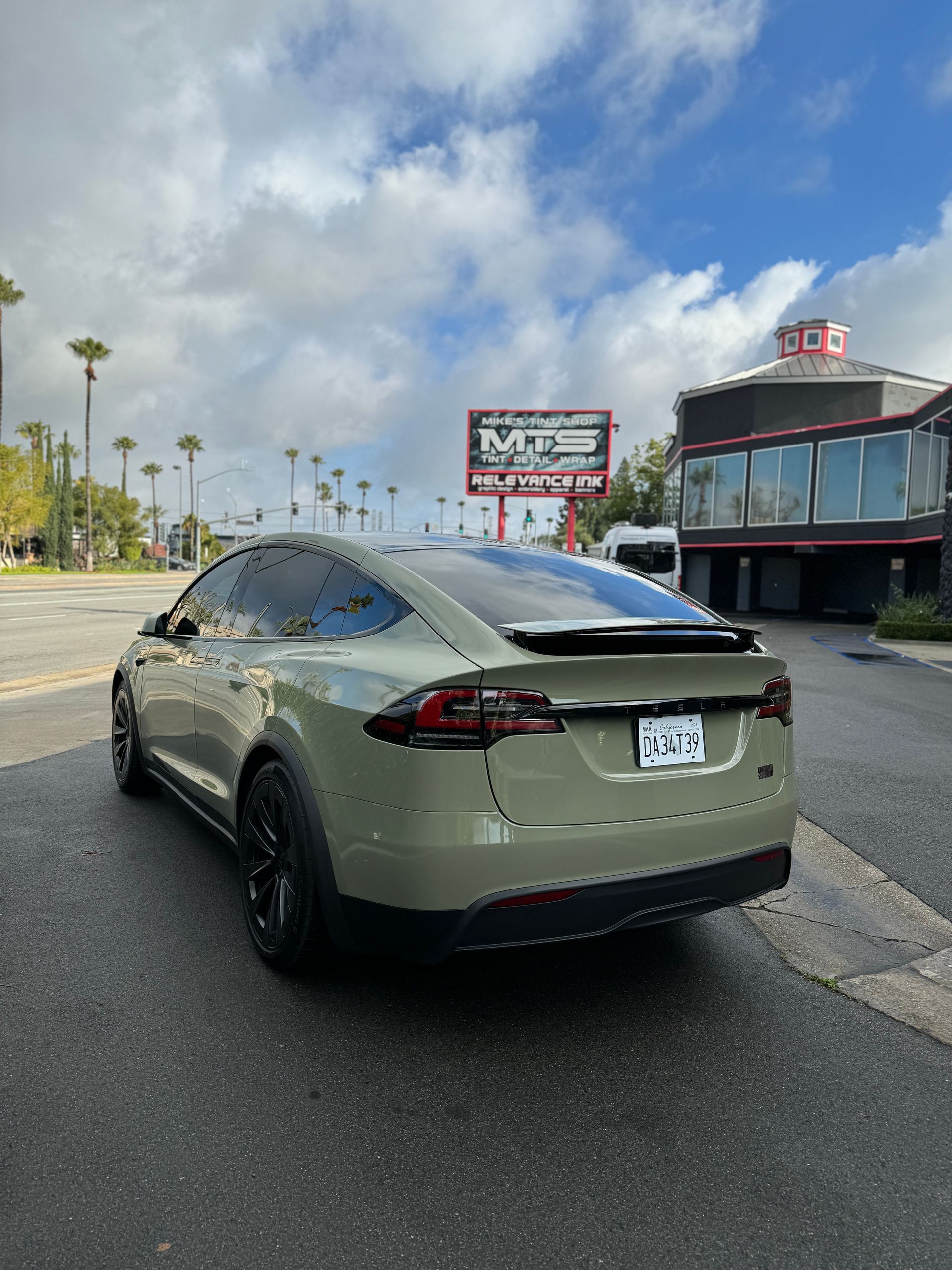
5 STAR QUALITY SERVICE
Ceramic Coating vs. Wax: What's Actually Worth Your Money in the Long Run?
You drive off the lot after a fresh detail and the paint looks incredible. Two months later, the glow is gone, water spots are back, and you're wondering whether you're just going to keep chasing that shine forever. We hear this from customers every week at Mike's Tint Shop. The frustration is real, and it usually comes down to one question that nobody gives a straight answer on: should you stick with wax, or is it finally time to make the move to ceramic coating?
Both options protect your paint. Both produce a clean, glossy finish. But they work very differently, they last very differently, and over time, the cost difference between them is not what most people expect. In this guide, we'll walk you through how each product actually functions, what the numbers look like over five years, and the honest situations where one makes more sense than the other. By the end, you'll know exactly which direction fits your vehicle and your life.
The Short Answer: It Depends on Your Situation
If you drive your vehicle daily and it spends most of its life in Southern California's sun, ceramic coating is the stronger long-term investment. The UV intensity, ambient heat, and coastal salt air in this region break down wax faster than almost anywhere else in the country. What might last 12 weeks in the Pacific Northwest might only hold 4 to 6 weeks parked outside in Orange County.
That said, wax is a completely legitimate choice if your vehicle is garaged most of the time, if you enjoy the hands-on ritual of regular maintenance, or if you change vehicles frequently enough that a multi-year investment does not make financial sense. The goal here is not to sell you something you do not need. Our job is to give you the information to make the right call.
How Car Wax Actually Works
Car wax has been protecting vehicle paint for decades, and it does its job well within its limits. The key thing to understand is that wax does not bond with your paint chemically. It sits on top of the clear coat as a sacrificial barrier, meaning it absorbs the environmental abuse so your paint does not have to. When it's gone, it's gone, and everything below becomes exposed again.
Most waxes are made from carnauba, a natural substance derived from palm leaves in Brazil, sometimes blended with synthetic polymers to extend durability. When freshly applied, the result is a warm, rich glow that is particularly beautiful on darker paint colors. Car show enthusiasts and collectors love it for exactly that reason.
The trade-off is durability. A well-applied wax job typically holds anywhere from 4 to 12 weeks, depending on conditions. In Southern California, vehicles parked outside should expect to land on the shorter end of that window. Heat causes wax to soften well before it reaches its full melt point, and UV exposure accelerates breakdown significantly.
Types of Wax: Carnauba, Synthetic, and Spray
Not all waxes are the same, and the type you choose affects how long it lasts and how it looks:
- Carnauba wax: Natural, warm-toned finish with the deepest glow. Shorter lifespan of 4-8 weeks, but preferred for show vehicles and enthusiasts who enjoy the process.
- Synthetic wax / paint sealant: Polymer-based formula that extends protection to 4-6 months. Less of the organic warmth, but more practical for daily drivers who want to reduce reapplication frequency.
- Spray wax: The quickest option for a fast refresh between full applications. Shortest durability of all the types, typically just a few weeks.
How Ceramic Coating Works
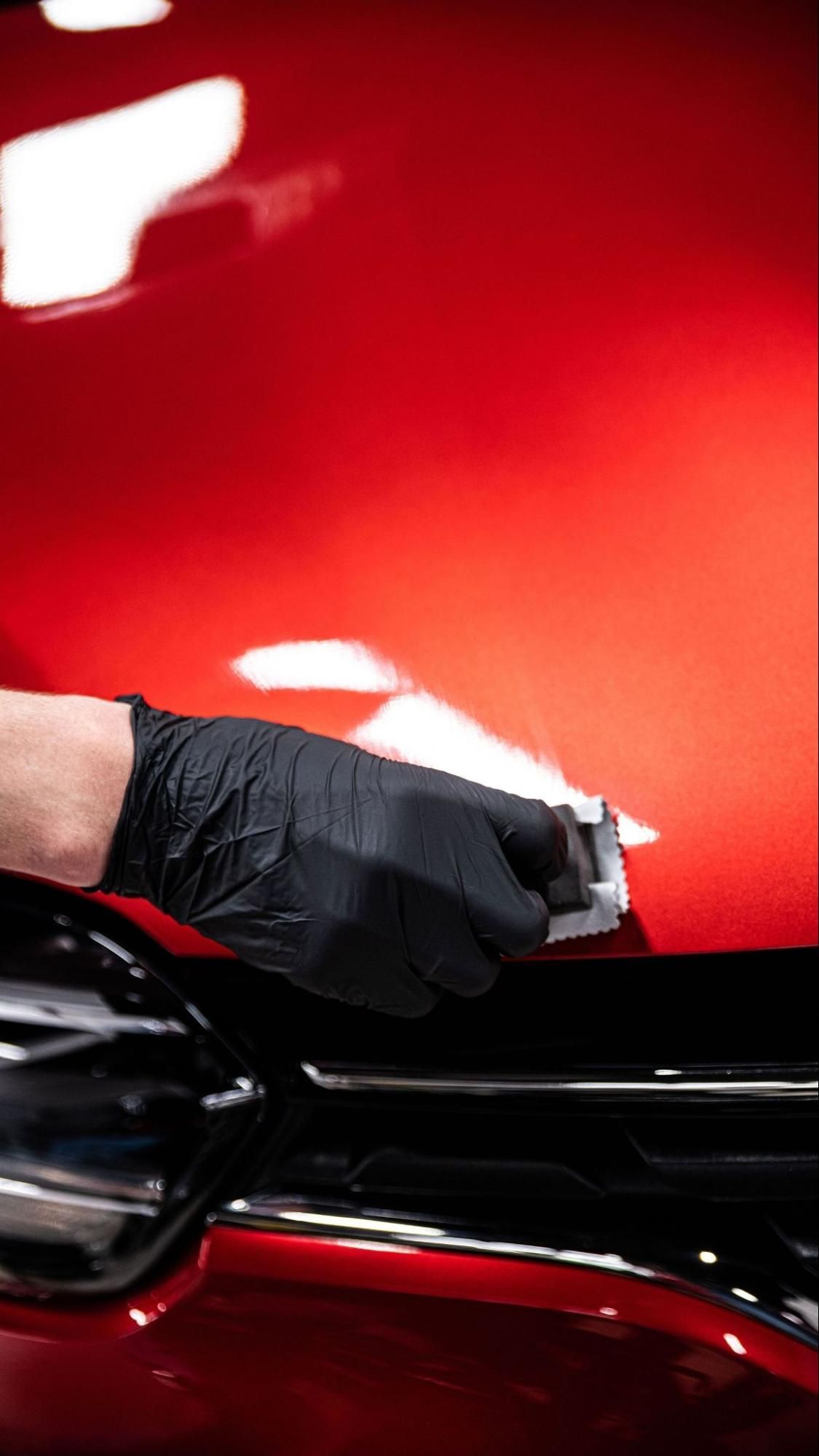
Ceramic coating is a liquid polymer compound built around silicon dioxide, commonly noted as SiO2. Unlike wax, it does not sit on top of your paint, it chemically bonds to the clear coat and becomes part of the paint system. Once it cures, you are dealing with a glass-like, semi-permanent surface layer that repels water, resists chemical etching, blocks UV radiation, and holds up against light scratches and swirl marks.
Professional-grade coatings carry a hardness rating of 9H, which is the top of the pencil hardness scale used to measure scratch resistance. That does not mean ceramic coating makes your car bulletproof. It will not stop a rock chip, a deep key scratch, or a parking lot collision. What it does is dramatically reduce the damage caused by the everyday hazards your paint faces: bird droppings, acid rain, road grime, automatic car wash brushes, and the cumulative UV exposure that fades paint over time.
The other major benefit is hydrophobicity. A properly coated surface causes water to bead up and roll off rather than settling and leaving mineral deposits behind. Dirt and contaminants have a significantly harder time bonding to the surface, which means the vehicle stays cleaner between washes and washing takes far less effort.
Professional Grade vs. Consumer DIY Kits
This distinction matters more than most people realize. Consumer ceramic coating kits sold at auto parts stores or online are SiO2-based, but they are formulated for durability in the 6-to-12-month range at best. They also require meticulous surface prep to apply without streaking or high-spot issues, and errors on application are difficult to correct once the product cures.
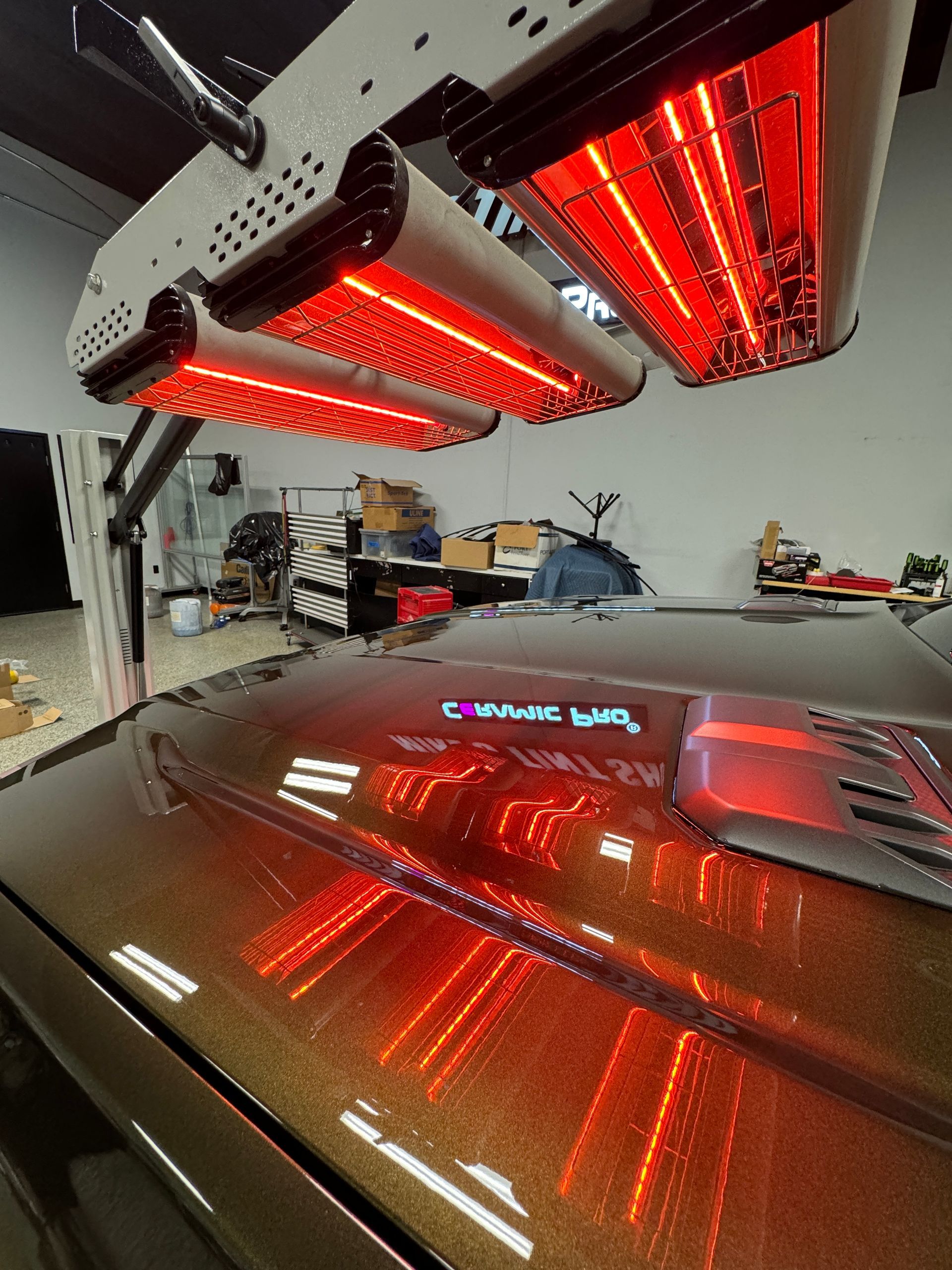
The professional-grade coatings we use at Mike's Tint Shop are not available for retail purchase. These are the same formulas used by Ceramic Pro-certified shops and high-end detailers. Applied by trained technicians on a properly decontaminated and corrected surface, with infrared curing to accelerate and improve adhesion, a professional application delivers 2 to 5 years of protection depending on the package. The prep process and the product together are what make the difference.
Head-to-Head: Ceramic Coating vs. Wax
Here is how the two options compare directly across the factors that matter most to a daily driver:
| Factor | Car Wax | Ceramic Coating (Professional) |
|---|---|---|
| Protection method | Sits on top of paint; wears off | Chemically bonds to clear coat |
| Durability | 4-12 weeks | 2-5 years |
| UV protection | Limited | Strong — resists fading and oxidation |
| Hydrophobics | Mild water beading | High-grade — water and dirt roll off |
| Scratch resistance | None | Resists light scratches and swirl marks |
| Heat resistance | Softens in direct heat | Stable at high temps |
| Application | DIY-friendly, ~1 hour | Professional prep, 1-2 days |
| Upfront cost | $10-$80 DIY / $50-$150 professional | $350-$1,800 (Mike's Tint Shop packages) |
| Maintenance | Reapply every 4-12 weeks | pH-neutral washes + SiO2 boost spray every 3-6 months |
| Gloss and shine | Warm, organic glow | Deep, mirror-like reflective finish |
| Resale value impact | Negligible | Positive — maintained paint condition |
Looking at that comparison, ceramic coating wins on nearly every technical metric. But the table does not capture the one variable that matters as much as anything else: your specific situation. That's what the next section addresses.
The Real Cost Breakdown: 5-Year Math
This is where the conversation usually shifts. The upfront sticker on ceramic coating stops most people, and understandably so. But the five-year picture looks quite different.
Scenario: daily driver, outdoor parking, SoCal UV exposure
Run the numbers for a daily driver in Southern California parking outside.
Wax route (DIY)
A quality carnauba or synthetic wax runs $25 to $50 per application. Applied every 6 to 8 weeks in Southern California conditions, that's roughly 8 to 10 applications per year, or $200 to $500 in product annually. Over five years, you're looking at $1,000 to $2,500 in product alone, plus the time investment of 40 or more application sessions.
Wax route (professional)
If you're taking your vehicle to a detailer for wax, expect to pay $75 to $150 per visit. At the same 6-to-8-week cadence, that's 8 to 10 visits per year, or $600 to $1,500 annually. Over five years, you're looking at $3,000 to $7,500 in professional waxing costs.
Ceramic coating route (Mike's Tint Shop)
Our Silver package starts at $1,600 and carries a 5-year warranty. Maintenance after that is a pH-neutral car wash as needed and a $20 to $30 SiO2 boost spray applied twice a year. Total 5-year cost including maintenance products: roughly $1,800 to $2,000.
Even compared to the DIY wax route, ceramic coating lands in a comparable range over five years while requiring far less labor and delivering a protection level that wax simply cannot match. For the right vehicle and use case, it is not a luxury, it is the practical choice.
Ready to stop reapplying wax every few weeks?
Get a free ceramic coating estimate from Mike's Tint Shop. Call (657) 221-3352 or visit mikestintshop.com/ceramic-coating
When Wax Still Makes Sense
We want to be straightforward about this. Ceramic coating is not the right answer for every vehicle or every owner. Here are the situations where wax remains a perfectly solid choice:
- Weekend or show vehicles: If your vehicle lives in a climate-controlled garage most of the time and comes out for occasional drives or events, the durability advantage of ceramic coating is largely wasted. A fresh carnauba wax will deliver the warm, deep glow that show car enthusiasts prefer.
- Short-term ownership: If you change vehicles every 12 to 18 months, a multi-year coating investment does not have time to pay off. Consistent waxing makes more financial sense in that context.
- Budget constraints: Wax gets the job done. It is not a wrong choice, it is a different trade-off. If the upfront investment is not feasible right now, maintaining a clean wax layer is still far better than no protection at all.
- Ongoing paint work: If your vehicle is in the middle of body repairs or paint correction is still needed, there is no reason to apply a coating until the surface is in its final state. We address all paint correction before any coating application anyway.
If you see yourself in any of those situations, wax is a legitimate call. For everyone else, the math and the protection level favor ceramic.
What About Paint Protection Film — Should You Combine?
Ceramic coating and paint protection film (PPF) are frequently confused with each other, but they solve two completely different problems.
Ceramic coating is chemical and UV armor. It bonds to the clear coat and creates a surface that resists oxidation, chemical etching, environmental contamination, and minor abrasion. What it cannot do is absorb physical impact. A rock chip, a deep scratch from a key, or a shopping cart contact will still reach the paint.
PPF is physical impact armor. It is a thick, self-healing thermoplastic film that absorbs rock chips and surface impacts before they reach the paint. It does not have the same hydrophobic or UV-defense properties that ceramic coating delivers.
Many of our customers in Southern California choose to combine both for maximum protection, particularly on newer vehicles or high-value cars. Our Signature Package pairs PPF with ceramic coating for exactly that reason. Think of it as covering both bases: the film handles the physical threats, the coating handles everything else.
Ceramic Coating Packages at Mike's Tint Shop
We offer four ceramic coating packages at our Orange, Riverside, and Corona locations, each built around a different level of protection and warranty coverage.
- Sport ($350+): Our entry-level option for drivers who want professional ceramic protection without the full prep process. Includes a foam wash, clay bar, and a single CeramicPro Sport layer. 6-month warranty.
- Bronze ($1,200+): One layer of 9H ceramic plus a top coat, decontamination wash, Level 1 paint correction, infrared curing, and coverage across glass, headlights, taillights, and wheel faces. 2-year warranty.
- Silver ($1,600+): Two layers of 9H plus two top coats, the same full-surface coverage as Bronze, and a 5-year warranty. Our most popular package for daily drivers in Southern California.
- Gold ($1,800+): Our flagship package. Four layers of 9H, Level 2 paint correction, double application to paint and body work, infrared curing, full surface coverage, and a lifetime warranty.
Not sure which package fits your vehicle? Our team at any of our three locations will walk you through the options based on how you use your car, where it's stored, and what protection matters most to you. There is no pressure and no guesswork.
Frequently Asked Questions
Does ceramic coating mean I never have to wash my car again?
No, but it makes washing significantly easier and less frequent. The hydrophobic surface prevents contaminants from bonding the way they would on bare paint or waxed surfaces. A quick rinse often does most of the work. That said, regular pH-neutral washes are still part of maintaining the coating properly.
Can I wax my car after a ceramic coating is applied?
We do not recommend it. Traditional wax sits on top of the coating and actually masks its hydrophobic properties rather than adding to them. If you want to refresh the coating's water-beading performance between services, use a ceramic-specific SiO2 boost spray instead. It bonds with the coating layer rather than working against it.
How long does professional ceramic coating last in Southern California?
A professionally applied coating from Mike's Tint Shop lasts 2 to 5 years depending on the package you choose. Vehicles that are garaged nightly, washed regularly with pH-neutral soap, and brought in for periodic exterior detailing will see results toward the longer end of that range. Vehicles that park outside daily and go through automatic car washes will see faster degradation.
Is ceramic coating worth it on an older vehicle?
It depends on the condition of the paint. Ceramic coating does not cover up defects, it amplifies them. Any scratches, swirl marks, or oxidation present on the surface at the time of application will be more visible after coating, not less. That is why our process includes paint correction before any coating is applied. Once the paint is in good shape, older vehicles benefit from ceramic coating just as much as new ones.
What is the difference between ceramic wax and an actual ceramic coating?
Ceramic wax, sometimes called hybrid wax, is a traditional wax product infused with some SiO2 particles. It is better than standard wax and beads water more aggressively, but it does not chemically bond to the clear coat the way a true ceramic coating does. Durability is still measured in weeks or months, not years. It is a reasonable middle ground for owners not ready for a full professional application, but it is a different product category entirely.
How much does ceramic coating cost near Orange, CA?
Our packages at Mike's Tint Shop start at $350 for the Sport entry-level option and go up to $1,800 and above for our Gold lifetime-warranty package. Pricing varies based on vehicle size and any paint correction needed before application. Call us at (714) 997-8468 for a free quote, or fill out the form at mikestintshop.com/ceramic-coating.